/orbit-null-the-cryptic-terminal-escape-room · v1 · Sep 3, 2026
Orbit Null - The Cryptic Terminal / Escape Room
Testing out the new Gemini 3.7 Flash model. My simple prompt: "Hey Gemini 3.7 let's do something cool", it came up with this Escape Room idea and chose it as the preferred build...
Chat Escape Room / Cryptic Terminal
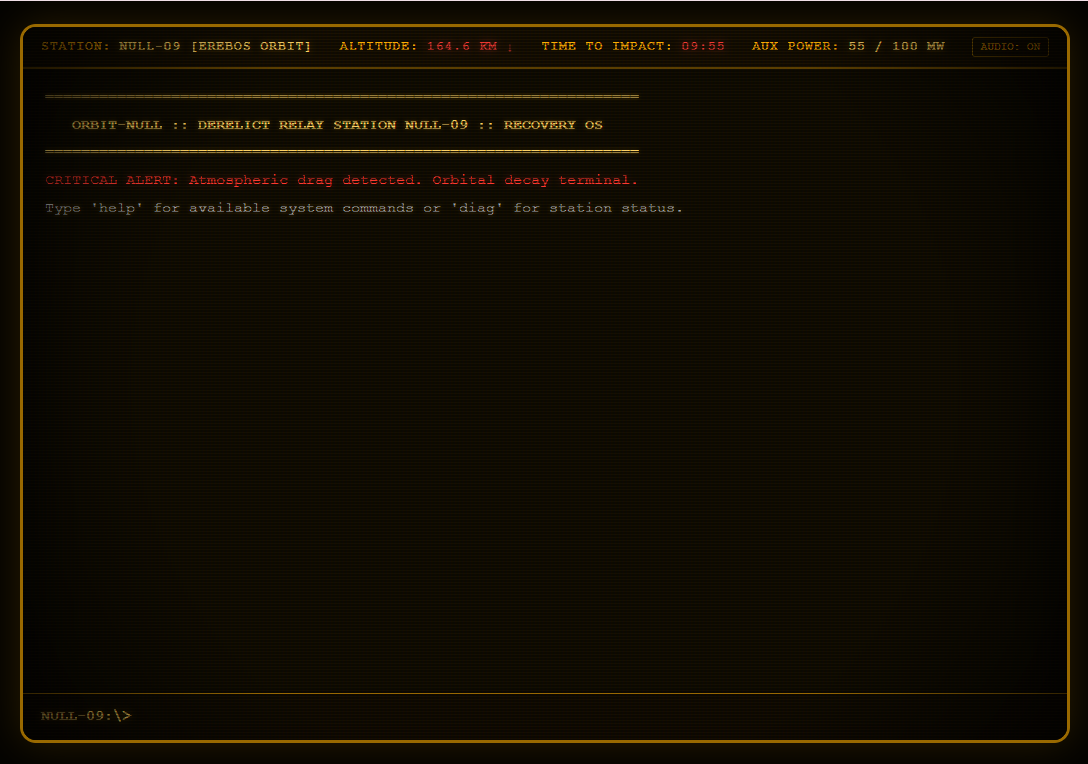
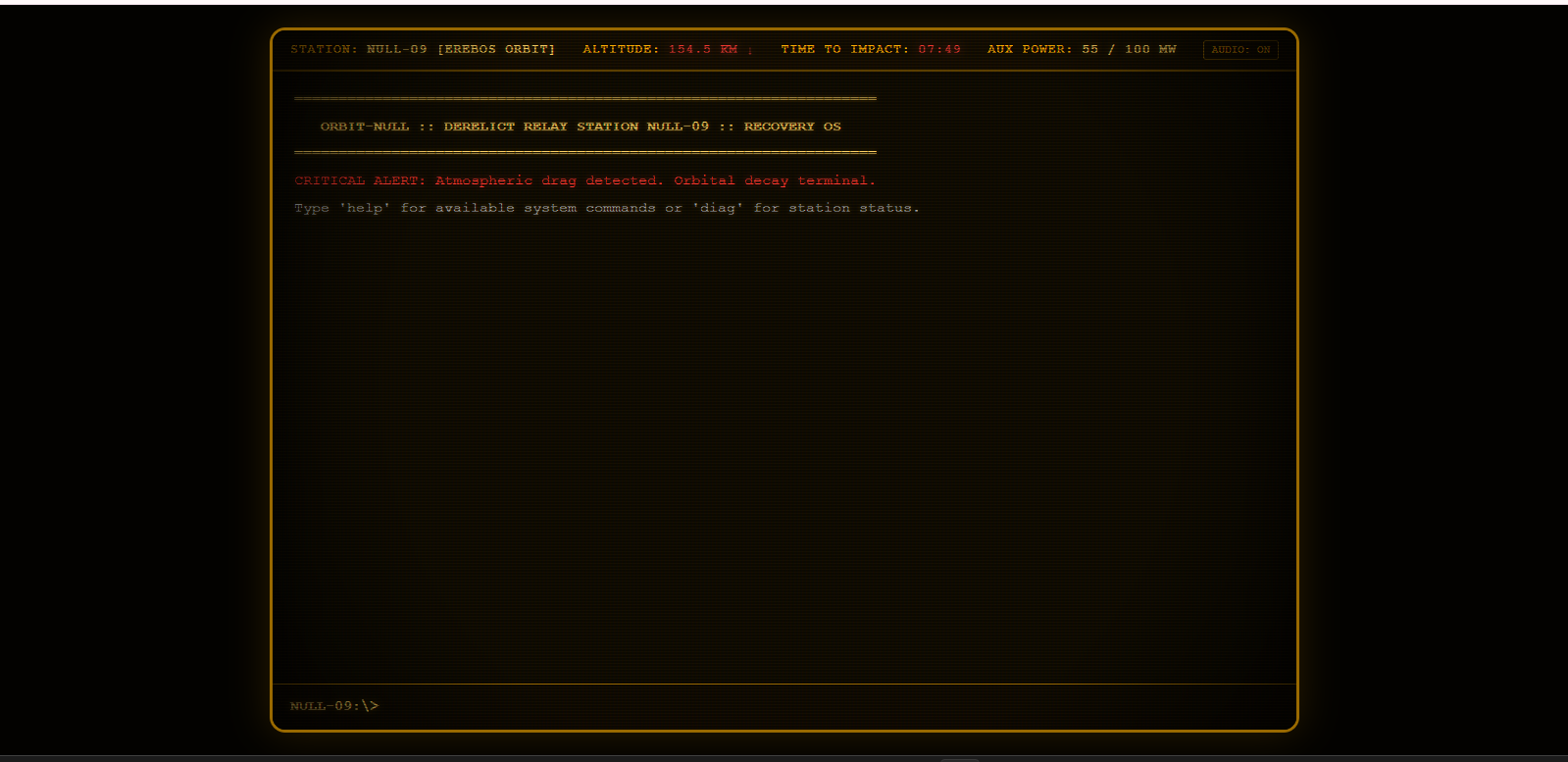
How it works: The chat window turns into a diegetic, corrupted computer terminal from an abandoned deep-sea research lab or quarantined orbital station (e.g., AETHON_OS [Version 3.4.1]).
The Gameplay: You explore by typing simulated terminal commands (e.g., LIST_DIR, READ log_402.txt, BYPASS_DOOR, DIAGNOSTICS). You’ll have to decipher corrupted logs, correlate system errors to figure out hidden passwords, and balance reactor/oxygen levels before the station breaches.
Building The Cryptic Terminal / Escape Room for a live website like leah.plaiground.online combines the puzzle design of an escape room with retro web aesthetics.
Gemini can write the entire experience as a single, zero-dependency .html file (HTML + CSS + JavaScript) that you can drag and drop directly onto your server.
Here is the blueprint for how we architect and build it:
1. The Aesthetic & Sensory Layer (Frontend & Audio)
To make it feel like you’re sitting in front of a real 1980s/90s military or deep-sea workstation:
CRT Phosphor Screen Effect: Pure CSS scanlines, subtle screen curvature/vignette, flicker, and an amber or emerald-green glowing monospace font (e.g., VT323 or Courier New).
Procedural Web Audio (Zero Audio Assets): Using the browser’s native AudioContext API, the script synthesizes its own sound effects in real time:
Keystroke clicks and terminal beep confirmations.
Low-frequency reactor ambient drone.
Static bursts and alarm klaxons when security is triggered.
Typewriter & Glitch Effects: Text streams in dynamically with realistic terminal lag and simulated bit-rot/corrupted UTF-8 glyphs (█▓▒░) on damaged sectors.
2. The Engine Architecture (The Mechanics)
code
Text
┌─────────────────────────────────────────────────────────────┐
│ PLAYER INTERFACE │
│ [ Command Input ] ──► [ Shell Parser & Autocomplete ] │
└──────────────────────────────┬──────────────────────────────┘
│
▼
┌─────────────────────────────────────────────────────────────┐
│ VIRTUAL TERMINAL CORE │
│ ├─ Virtual File System (VFS): /sys, /logs, /net, /locks │
│ ├─ State Machine: Station Power, Pressure, Lockdown Levels │
│ └─ Command Handlers: cat, ls, decode, bypass, reroute │
└──────────────────────────────┬──────────────────────────────┘
│
▼
┌─────────────────────────────────────────────────────────────┐
│ PUZZLE DEPENDENCY GRAPH │
│ [Corrupted Logs] ➔ [Power Rerouting] ➔ [Override Sequence] │
└─────────────────────────────────────────────────────────────┘
A. The Virtual File System (VFS)
A structured JSON object acts as the simulated operating system’s drive:
code
JavaScript
const vfs = {
"/logs": {
"shift_log_04.txt": "Station integrity 42%... Containment failing in Sector 4.",
"incident_blackbox.raw": "[ENCRYPTED DATA BLOCK - KEY REQUIRED]"
},
"/sys": {
"reactor.cfg": "POWER_GRID: PRIMARY_OFFLINE | AUXILIARY_STANDBY",
"airlock_override.exe": "Requires clearance Level 3."
}
};
B. Command Parser & REPL
The parser handles standard UNIX-style commands alongside game-specific interactions:
help / man — Lists available utility commands.
ls / dir — Explores directory trees.
cat [file] / read [file] — Displays system memos and diagnostic readouts.
reroute [subsystem] [power_units] — Balances energy grid loads.
decrypt [file] --key [passcode] — Unlocks encrypted logs.
status / diag — Displays live life-support and hull integrity metrics.
3. The Multi-Layered Puzzle Logic
The game is structured as a progression graph where solving one system unlocks access to the next:
Phase 1: Forensics & Discovery
The player runs diag and discovers life support is running on a 15-minute countdown.
Reading corrupted memos reveals hints about a staff member's password and a forgotten maintenance bypass code.
Phase 2: Logic & Grid Calibration
Accessing the power subsystem reveals a mini-puzzle: You only have 100MW of auxiliary power, but need to power the Comms Array (45MW) and the Decompression Chamber (60MW).
The player must discover how to shunt power from non-critical subsystems (like Cryo-Storage) without triggering a failsafe.
Phase 3: Cipher / Decryption
Decrypting the black box requires identifying an anomaly frequency mentioned across multiple incident reports (e.g., matching timestamps to seismic anomalies).
Phase 4: The Escape Sequence
Triggering the final emergency evacuation sequence before the structural integrity hits 0%.
4. What Gemini 3.7 Brings to This Build
Self-Contained Complexity: Generates complete, bug-free, single-file applications with rich CSS styling, procedural audio synthesis, and complex state management in one shot.
Coherent Worldbuilding: Crafts atmospheric, grounded sci-fi lore with technical authenticity so clues feel like real workplace logs and system telemetry rather than generic video game hints.
Tight Logic Design: Builds robust puzzle graphs that prevent soft-locks and include natural error handling (e.g., helpful error hints when you mistype or make an invalid move).